Archeological sites
Caltanissetta
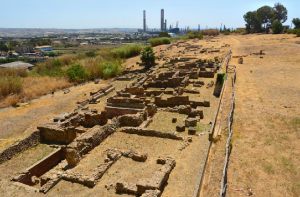
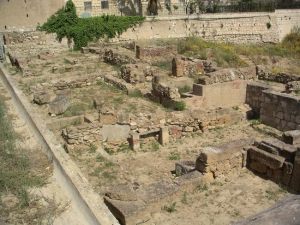
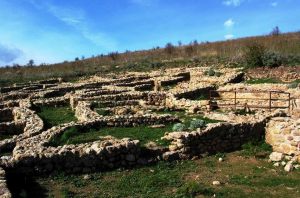
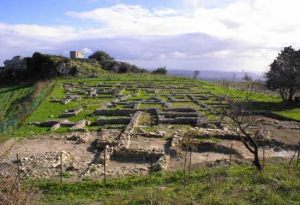
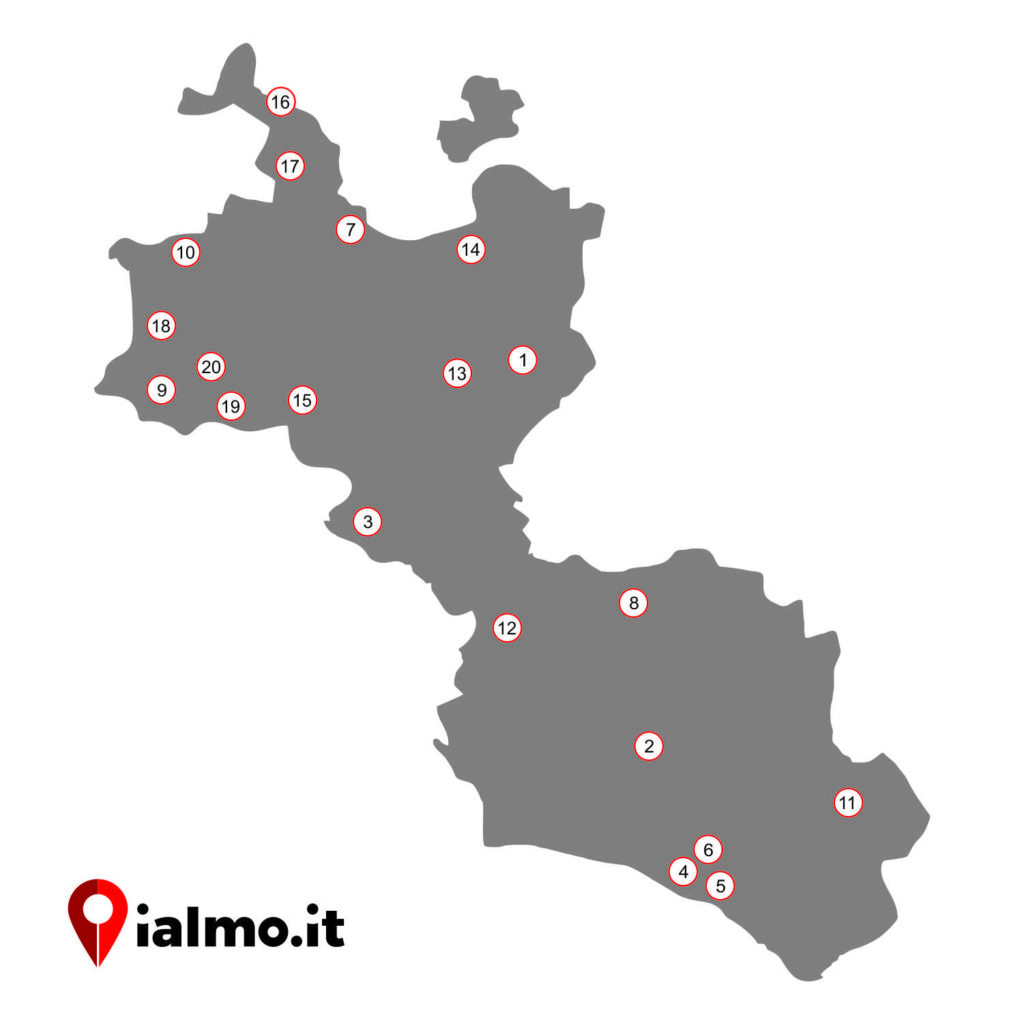
Archaeological Parks, Caltanissetta: the ancient roots of Caltanissetta are reflected in every corner of its territory. The bridge of Capodarso, built by Venetian masters in 1553, is a good example of it, it was in fact considered the third beauty of the island, together with Mount Etna and Lake Lentini. Near the city you can also visit the remains of the Castle of Pietrarossa, probably built by the Arabs and destroyed by an earthquake in 1567. In Caltanissetta there are also three important archaeological parks. The Palmintelli park, which came to light following the excavations conducted in 1988, is located in a central area of the city. Originally the area housed a funerary complex dating back to the Bronze Age, there are numerous archaeological finds found inside it. At about five kilometers from the city we find the archaeological park of Gibil Gabib. The excavations, which began in the second half of the nineteenth century and continued several times in the middle of the last century, revealed the presence of indigenous prehistoric settlements and the Greek age in the area. Parts of the city walls and a real defense tower from the mid-6th century BC were also brought to light. The statuettes found in the area testify to the existence of various spaces dedicated to worship and veneration. A little out of the inhabited center we find the archaeological park of Sabucina, come to light in the Sixties. The site identified settlements that followed one another from the Bronze Age to the Roman period.
Protohistoric village Contrada Consi, Butera: it is the oldest archaeological element so far found in Butera, is located south-east of the rise on which stands the medieval castle, where they were identified remains of huts dating between the eighth and half of the seventh century a. C. Moreover, the particular geographic position in which Butera stands, has suggested that the site must have been occupied by an important ancient settlement. The first evidence came to light only at the beginning of the last century to the north of Piano della Fiera, where Paolo Orsi identified the remains of a necropolis of the 4th-3rd century BC. C. The archaeological investigation was resumed in the fifties by the Romanian scholar Dinu Adamesteanu. Following the discoveries made during that survey, Butera and its territory have become part of the archaeological literature as one of the most important areas of inland Sicily; importance increased and demonstrated by the research currently underway by the Soprintendenza di Caltanissetta.
Site Contrada Cappellano, Delia: located near the SS 190 connecting Delia to Caltanissetta, in Contrada Cappellano, is home to human settlements of the ancient Bronze Age; there have been found some oven-baked tombs, one of which with a double oven, in an excellent state of conservation. Also noteworthy is the so-called “Castidrazzu” which recent archaeological excavations have identified with the medieval castle of Sabuci. Near the building were found finds dating back to the third millennium BC. and numerous testimonies of the passage of the various populations that have conquered the territory.
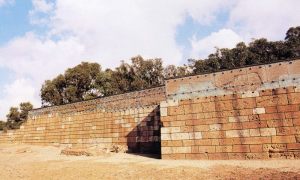
Timoleontee di Capo Soprano, Gela: the archaeological excavations of the fifties brought to light these fortifications considered by the most important and best preserved scholars among the defensive walls of classical archeology. Their function was to circumscribe and defend the original city of Gela built by the Cretan settlers in 689 BC. and then destroyed a few centuries later. The discovery of the archaeological area is linked to a curious episode: it was a farmer who, having dreamed of a secret treasure hidden in his property, began to dig to find the remains of these fortifications. Their dating was set around the 5th century BC before the capture of Gela by the Carthaginians, while the inhabited neighborhood surrounding the walls would be of timoleontea age. The walls are built of sandstone in the lower part, and are surmounted by clay bricks dried in the sun reaching a height of three meters. The fortifications surround a park that separates the modern city from the sea, rich in vegetation, where many events take place in an enchanting setting, among which the representations of the Greek tragedies organized by the Municipality. Besides the park, moreover, the remains of two necropolises from the Archaic period and a thermal plant of the same age of construction of the walls have been brought to light, considered one of the oldest in operation in antiquity. The baths, whose model was a forerunner of those then used by the Romans, also provided an advanced system of heating and water conservation through an underground canalization and the use of large tanks.
Acropolis, Gela: situated on the hill of Molino a Vento, it was, as in common use in antiquity, the highest part of the city, from which to dominate with sight all the land below. The place was also used for the construction of sacred places and temples. This was when Timoleonte, taking over the city government, had a built-up area built there, supplanting the places of worship. Among the most important findings brought back to life is the base of a Doric temple dedicated to Athena and dated around the VI century BC. The remains of the polychrome terracottas that decorated the pediments and the trabeation can now be viewed at the Archaeological Museum. The discovery of another Doric column suggests the presence of a second temple, also dedicated to the warrior goddess. Also worthy of mention are the remains of two bell-shaped tanks, some houses and a long wall.
Bosco Littorio, Gela: the current name was attributed to him during the Fascist era. It is a sandy area, rich in vegetation, inside which the remains of a Greek emporium dating back to the 6th century BC have been found. The structure of the emporium has a quadrangular base with high walls, made up of raw bricks dried in the sun. In many parts the original plaster of the walls is retained. The findings consist mostly of ceramics and containers, which support the thesis of commercial use of the structure. All the findings can be viewed at the Archaeological Museum.
Monte Castellazzo, Marianopoli: it is a necropolis referable to the Copper Age. Inside the scholars have also identified an acropolis and an inhabited nucleus surrounded by walls of the Hellenistic age, probably the ancient Mytistraton destroyed by the Romans in the first Punic war. Many remains brought to light and viewable at the archaeological museum of the city: from coins to ceramics, from weapons to steles with inscriptions in Greek. We also point out: Monte Balate has been the seat of an indigenous, then Hellenized inhabited center and has returned the remains of a sanctuary on the acropolis; the Necropolis of Valle Oscura to the south of Monte Balate contains some tombs (6th century BC) that belonged to the indigenous inhabitants of the ancient city and are all excavated inside rocks or natural ravines already used for the same purpose in prehistoric times.
Philosophiana Station, Mazzarino: it is a Roman-Byzantine town that includes the remains of a thermal building and a Byzantine basilica whose internal structure has three naves. The name is derived from a former feud that fell within the territory of Mazzarino, that is the feud of Sofiana in the district Pitrusa. Important the marble thermal structure that today shows traces of mosaics. To mention the more than 200 bronze pieces found in the calidarium. Beyond the remains of Roman origin, moreover, it would testify the presence of one of the first Sicilian civilizations.
Sites of Milena: in 1978 a large and complex Neolithic settlement was located in Contrada Serra del Palco-Mandria. On the eastern slopes of Mount Campanella, traces of a settlement that lasted for several centuries have also been brought to light. Its oldest nucleus is documented by several holes that make one think of housings for wooden poles of perimeter structures or huts. Similar settlements are also visible in the Monte Grande-Fontanazza district, Rocca Aquilia, Rocca Amorella-Pirìto, Zubbio di Monte Conca and Mezzebbi. The Monte Campanella holds a necropolis dating back to the 14th century BC. made up of tholos tombs of small dimensions but of particular interest and constructive refinement, they came randomly to light following a landslide. The tombs have a rectangular opening with a triple frame and sub-circular plan. The Roman age has left considerable evidence related to objects of common use and work in the rich sulfur deposits, such as the precious sulphuris tile with the inscription of Marcus Aurelius Commodiano (2nd century AD), kept at the Antiquarium A. Petix.
Polizzello, Mussomeli: in the archaeological site of Polizzello it is possible to observe a rock necropolis and numerous caves called in oven for their shape and their size. Also noteworthy: on Monte Raffe remains from the Greek and Roman period (among the finds, there are many coins of the Greek era and scrap of vessels and oil lamps), unfortunately the area is not guarded and many finds of great archaeological interest are they were stolen and went to enrich private collections; not far from the city we find the rupestrian necropolis of Cangioli, full of caves and niches dug in the stone.
Contrada Petrusa, Niscemi: on the slopes of Niscemi, an archaeological site dating back to the late ancient period is located. The stamps on amphora of the Praedia Galbana were found, farms that belonged to the state, within which were allocated storehouses. The remains of a Mansio remain today, that is to say a rest stop (imperial age), managed by the State for travelers. Next to the Mansio stood a station for changing horses. It is thought that there was an ancient road that led to the Contrada Piano Camera, another archaeological area. The recent excavations have brought to light a spa complex, still in the Petrusa district. According to the archaeologists, the calidarium (part of the thermal baths for hot baths or steam baths) with the combustion oven, a large tepidarium compartment (part of the thermal baths for lukewarm baths) and the suspensura (pillars) are clearly visible and recognizable with a square base that acted as a support to the floor) that spread the heat under the floor, thus heating the water. In the Niscemi area there are also archaeological sites dating back to the archaic-classical era, between the eighth and the fifth century BC, in the Castellana and Arcia Iacolano districts, where pottery was found that suggests the presence of human settlements dedicated to the agricultural exploitation of the territory, made possible also by the presence of the nearby Maroglio river. Testimonies of archaic forms of religious worship were, however, found in Pisciotto and Valle Madoni, as well as in the same district Arcia, where they were found remains of ancient necropolis.
Costa di Mandorle, Riesi: on the Zolfare road one can see a hundred small tombs very close to each other. It is a necropolis probably dated around the seventh century BC, in Sicilian-Sicilian age, as can be deduced from the structure of the mortuary rooms that, at that time, were created to contain the whole family unit with the bodies resting on the walls, so to recreate a kind of home fireplace.
Monte Vassallaggi, San Cataldo: the archaeological site stands on hills, between the river Salso and the Platani. It was already attended in the ancient Bronze Age, as evidenced by the remains of the Motyon village, with its red ceramics with geometric patterns, and the necropolis of caves set in the rock. The area was abandoned throughout the late Bronze Age, only to be repopulated in the Iron Age; in fact, in the latter period are the ceramic sarcophagi, the war tools and the ceramics found during the excavations. On the site you can also see the presence of Christian traces thanks to the remains of the tombs brought to light. The visit of the site is spread over three very interesting routes not only from the archaeological point of view, but also from the naturalistic one, with a landscape rich in vegetation and pleasant glimpses.
Cozzo dello Scavo, Santa Caterina Villarmosa: ancient settlement dating back to the Iron Age. Inside the excavations have brought to light many objects in clay, jars, coins but also work tools such as frames and millstones. The discovery of the bronze ring of Punic dating is very important. All the findings can be viewed at the Archaeological Museum of Caltanissetta.
Contrada Grottadacqua, Serradifalco: site of rural nature, is located on a hill in the shape of a cock’s crest, called “Lu vanzu”. The excavations have brought to light a necropolis dating back to the time of Mycenae and many remains of agglomerates belonging to the Copper Age, the Bronze Age, but also the Neolithic Age.
Tomb of Vallelunga, Vallelunga Pratameno: located at the Tanarizzi Hill, known as “Pirrera”, it was discovered by chance in 1915, during a funeral excavation and was studied by the illustrious archaeologist Paolo Orsi. A magnificent rock funeral complex (artificially carved from the rock) of the Siculo Eneolithic era was discovered. Remarkable also the material found, including pottery and craft products of immense value, now kept at the museum Paolo Orsi in Syracuse, in the prehistoric room. In subsequent years, in addition to the funerary equipment, skeletal remains were found, initially confused by the inhabitants of the village of Vallelunga with bones of animals; the material was sent to the University of Pisa, Department of Archaeological Sciences and studied for a long time. The analysis carried out on the finds showed how it was human remains of the dead buried in the Tomb Vallelunga and dating back to the same era, perhaps six people, male and female, all adults. These returned a glimpse of the habits of life of the time, it turned out that they fed mainly hunting and made a fair consumption of cereals and vegetables. Today the site has been revalued. La Pirrera formerly housed a sand and clay quarry.
Portella della finestra, Villalba: it is a megalithic site that rises on the Serre di Villalba in an area called Cozzo pirtusiddu. To attract the attention of scholars, a monolith that recalls, by form and possible meanings, the idea of an ancient “criosfinge” with a face oriented towards Polizzello, a rock work of considerable suggestion.
San Marco, Sutera: hillock of chalky nature where remains of ceramics have been brought to light and an anfratto dating back to the Byzantine age, within which it is possible to admire glimpses of frescoes of the era.
Monte Ottavio, Montedoro: along the eastern side of Mount Ottavio there are numerous natural caves and tombs dating back to the Sicilian and Greek settlement period, as well as numerous well-preserved but dangerous mines to be explored because they have never been secured.
Bompensiere site: just outside the town there are the archaeological remains of a village of the second millennium BC, many rock tombs are visible.