Arts and Culture
Caltanissetta
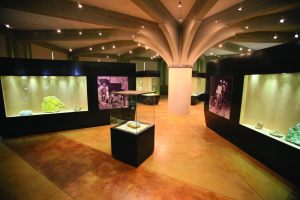
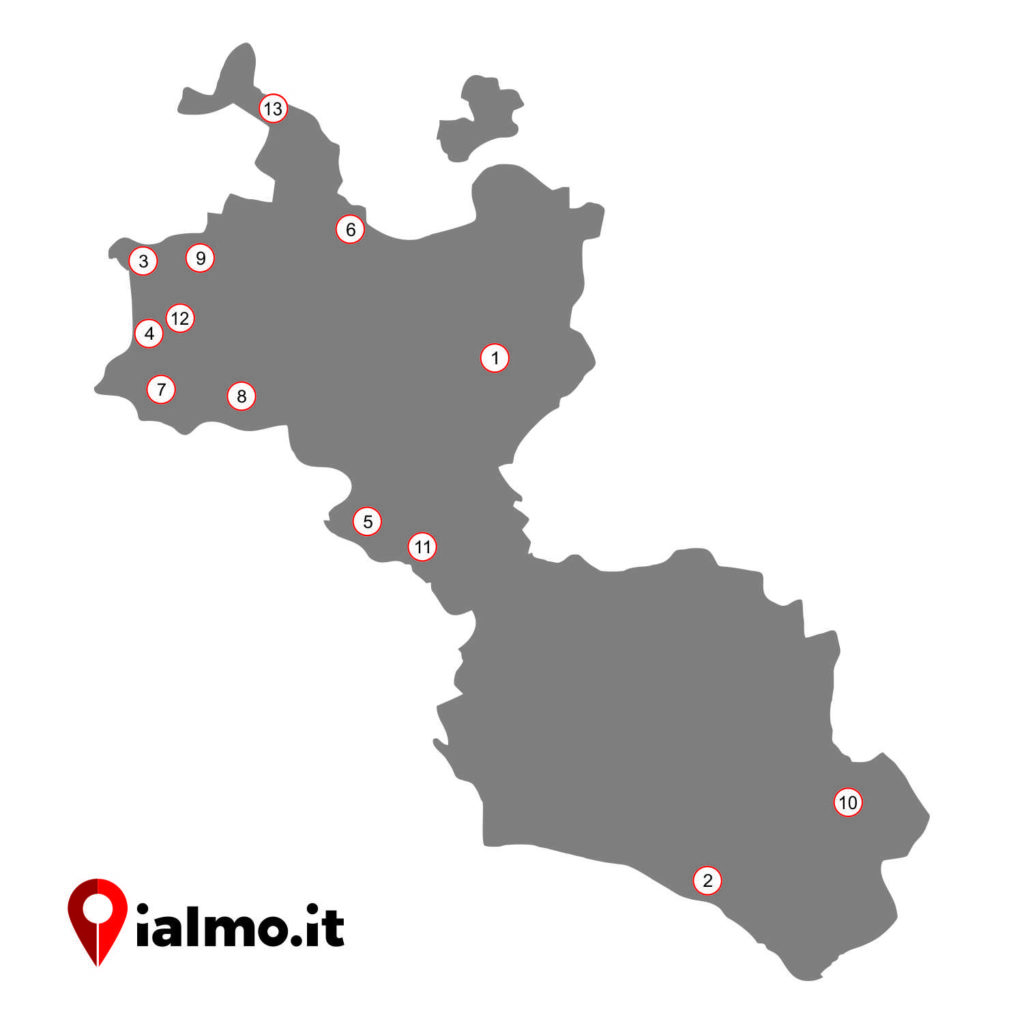
Mineralogical and Paleontological Museum of Zolfara: the Museum was founded on the initiative of the Special School of Mineralogy in homage to one of the most important resources for the growth of the city. It preserves a vast collection of minerals, fossils and rocks, the reproduction of mines’ interiors and used equipment.
In the Museum of Folklore and Popular Traditions there are the “vare”, plaster and papier-mâché representations representing the stages of the Via Crucis.
Since 2006, the Archaeological Museum, located next to the Abbey of Santo Spirito, has replaced the Civic Museum. In the museum are collected a large number of archaeological finds coming mostly from the necropolis of Mazzarino and the indigenous sites of Gibil Gabib and Sabucina.
In the Tripisciano Museum, inaugurated in 2010 in a wing of the Moncada Palace, various works by the Nissenian sculptor Michele Tripisciano are exhibited, donated by the author to the City at the time of his death. The structure also houses a room entirely dedicated to the Moncada, the ancient owners of the building.
The Diocesan Museum houses several works by local artists of the seventeenth and eighteenth centuries.
The Regina Margherita Theater, inaugurated in 1875, is named after Queen Margherita di Savoia who in 1881 was on an official visit to Caltanissetta. Particularly used until the Second World War, it was closed in the seventies. It was reopened in 1997 after a long and careful restoration.
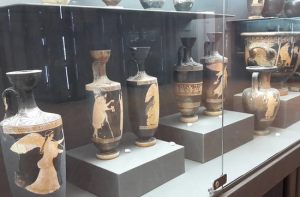
Regional Archaeological Museum, Corso Vittorio Emanuele n. 2. The building that houses it is adjacent to the acropolis of the ancient Greek city and preserves important collections of bronze, ceramic and numismatic finds, first among all the Navarra and Nocera collections that include a large number of black-figure vases and reds recovered from ships, coming from Greece, shipwrecked in the waters around the 5th century. BC.
Eschilo Municipal Theater in Via Sant’Agostino n. 34. It was built in the nineteenth century, but remained closed for several years until 2013. The main facade is neoclassical, has three entrances with arches, three large windows with a pediment and rose-painted cornice; this facade is the result of the restructuring that took place around the 1930s, which tried to reproduce the original structure. Over the years it has hosted several theater and film screenings that have been known since the 1930s.
The Museum of Emigration was born on August 4, 2005 in the premises of the San Giovanni Bosco building. Recall that Acquaviva Platani is an emblematic center of the emigration of the ’50s of the twentieth century, especially to the United Kingdom and France.
Museum of local history, inaugurated in 2002 on the occasion of the 50th year of priesthood of Don Vincenzo Antinoro, the first to encourage the construction of the museum by making available the parish premises. The museum is located in a hall on the first floor of the Baronial Palace which leads to the Church of Itria. Designed and edited by prof. Vincenzo Nicastro, preserves original documents (parchments, engravings, lithographs, woodcuts, photographs, sacred silver, books and publications of local interest) that tell the history and traditions of the country.
Archaeological Museum and Peasant Civilization, located in Piazza Castello. It houses archaeological finds ranging from prehistoric times to late medieval times, including those of majolica decorated with luster, of Spanish import, found near the Castellazzo di Delia, between 1985 and 1995, during the excavations conducted by the Superintendent of the BB .CC.AA. of Agrigento and Caltanissetta.
The Regional Archaeological Museum located in Piazza Garibaldi n. 1 holds a large collection of artefacts that illustrate the history of the city from prehistory to the Hellenistic age, found especially during excavations in the archaeological sites of Monte Castellazzo, Monte Balate and Valle Oscura.
Ethnographic Museum of the peasant civilization located in Viale Regione Siciliana n. 24. It is located inside the former premises of the elementary school Luigi Capuana and was created with the intent of preserving and preserving the environments, techniques and secrets of the ancient rural culture. The display of equipment for the production of cereals and bread-making, plows and old agricultural machines used until the fifties was very nice.
The Casa-Museo della Civiltà Contadina, located in Via Napoli, is an ancient residential unit that overlooks an irregular courtyard and contains important testimonies of the culture of living and living in the local farming world.
The Antiquarium Arturo Petix, built in 2002 in Piazza Karol Wojtyla exhibits the archaeological finds found in the district of Milena from the Neolithic age up to the modern age. The museum is dedicated to Arturo Petix, a local scholar and archaeologist.
The Observatory is located on a hill called Mount Ottavio, west of the village of Montedoro, within the Educational Park. Located in an important place of observation of the town and the surrounding landscape, the Observatory is a sort of natural scenic backdrop facing the village: from its summit it is possible to enjoy a 360 degree view of a large portion of the Sicilian hinterland. The building, in harmony with the enchanting surrounding landscape, follows the natural slope of the land and emphasizes it, presenting itself as a thin and elongated prism that emerges just from the ground. On this linear earthy prism emerges the opening dome, covered with copper and inside which there is a meeting room, with a capacity of about 50 seats, where is placed the digital planetarium, a tool of the latest generation for study and knowledge of the sky.
Museo delle Zolfare, located at the entrance to the Montedoro Educational Park. Through finds and works of art and with the aid of the model of a mine of the time, the city wanted to reconstruct the images of life in the mines of Montedoro. The museum, partially underground, also houses an ancient furnace for processing the material extracted from the old sulfur mine.
Archaeological antiquarium, recently renovated and expanded along the way and in its contents, is located inside the prestigious eighteenth-century setting of Palazzo Sgadari, the historic seat of the city’s first municipality. In the five large rooms in which the exhibition floor is divided, a large part of the findings found in the archaeological excavations of Polizzello and Monte Raffe are preserved, which tell the story of the territory from the prehistoric age.
The Museum of Peasant Civilization, dedicated to the historian Angelo Marsiano, traces the rural culture of Niscemi. The pieces that are enclosed in it were donated by some citizens to the local Lions Club who provided for cataloging them. Currently, about 2,000 items, including artifacts, tools, photographs and paintings, the Superintendency of Cultural Heritage of Caltanissetta, with its own decree, has tied more than 650. A wing of the museum is used as a conference room and periodically hosts cultural events that see the citizens of Niscemi.
The Didactic Museum of Natural History was founded in December 1989 in order to make known the geographic and naturalistic aspects of the central-southern area of Sicily, falling for the most part in the territory of the lower Nissena province and included between the Salso and Dirillo rivers, respectively to the west and east, and to the north limited by smaller watercourses (Braemi and Nociara torrent, Elsa river and Temple). In this area there are ecosystems and floristic and faunal emergencies that have justified the creation of some natural reserves, such as the local Sughereta, the Bosco di Santo Pietro and the Biviere di Gela. The Museum, initially managed by the local WWF section, passed into management in 1995 at the Environmental Education Center; the museum exhibition ranges from finds found in the field or received as gifts, to data of geographic, geological, paleontological, faunistic and floristic order.
Trabia Tallarita Museum of Sulphites, opened in March 2010, stands on the site of the Trabia Tallarita mine, between the territories of Sommatino and Riesi; it consists of a series of paths that allow you to live fragments of life in the mining industry. Also worthy of note is the Municipal Museum of Natural History and Mining Art, a permanent exhibition on the geological evolution of the area and the Ethno-anthropological Museum.
M.E.S. (Ethno-anthropological Museum of Sutera) is located in the old convent of the Carmelite Fathers. The museum is an example of participation and popular will: it has been made accessible, in fact, thanks to the contribution of students, parents and free citizens who have collected a heritage of the artisan and peasant collection making it possible to be born. Inside you can see ancient tools used for growing in the land, reproductions of domestic life of the past, equipment used in crafts dating back to the eighteenth and nineteenth centuries. The museum also houses a collection of early 20th century posters and those of emigrants to America and Northern Italy. Also very interesting is the collection of votive images representing saints and religious subjects that in ancient times had been used to exhibit in the bedroom. In the exhibition space have been set up reproductions of school environments of fascist age and domestic environments, such as the classic nacelle, that is the cradle for newborn that was used to hang over the bed of the master bedroom.
To visit: the Museum of the Sicilian Latifondo and the Ethnographic Museum of the rural culture, dedicated to Salvatore Lo Re.